
 Business License

Bone China Body Fundamentals: Where Bone Charcoal Enters the Recipe
Take the common cost reduction route: a bone china plate body loses six points of ash and gains feldspar to hold the maturing temperature. The plates leave the glost kiln with good colour and acceptable flatness, then fail a rim drop test that the previous body had passed for months.
The body has lost the crystalline skeleton that carries load, and no amount of glaze correction replaces it.
Understanding where bone charcoal in bone china actually sits in the recipe makes that kind of failure predictable rather than surprising. This guide covers the four ingredients, what the bone charcoal percentage does to fired properties, and how to record a bone china body formulation so that the next reformulation starts from a known point.
1. Where Bone Charcoal in Bone China Bodies Comes From
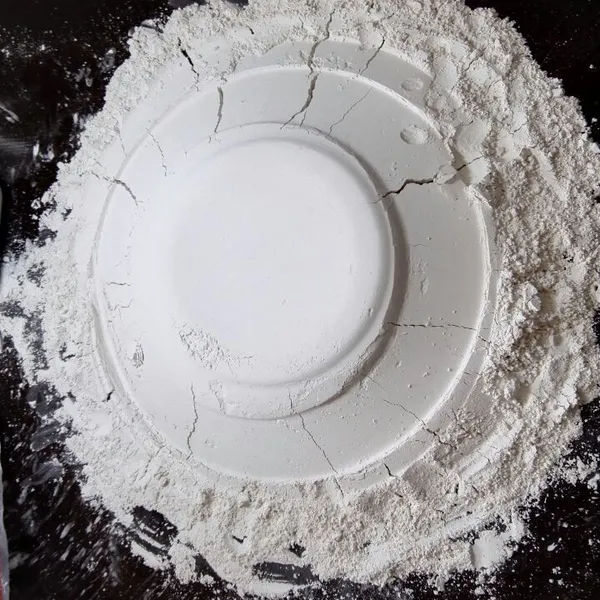
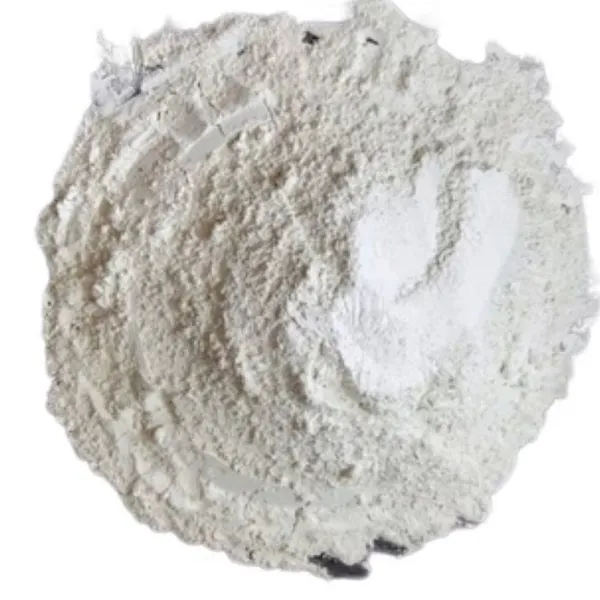
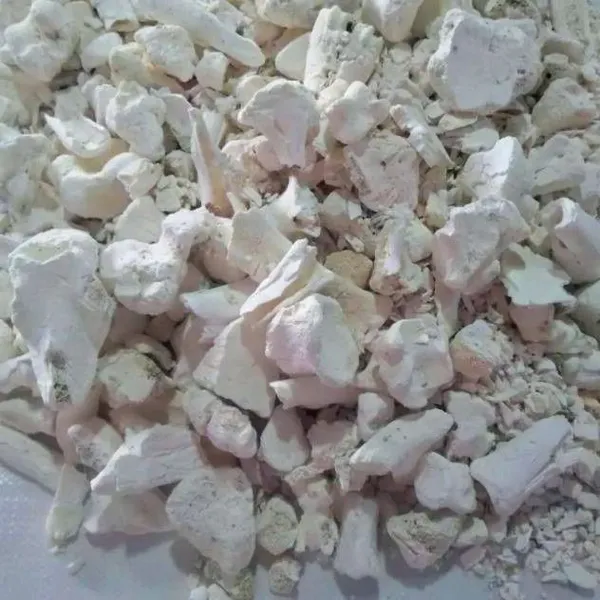
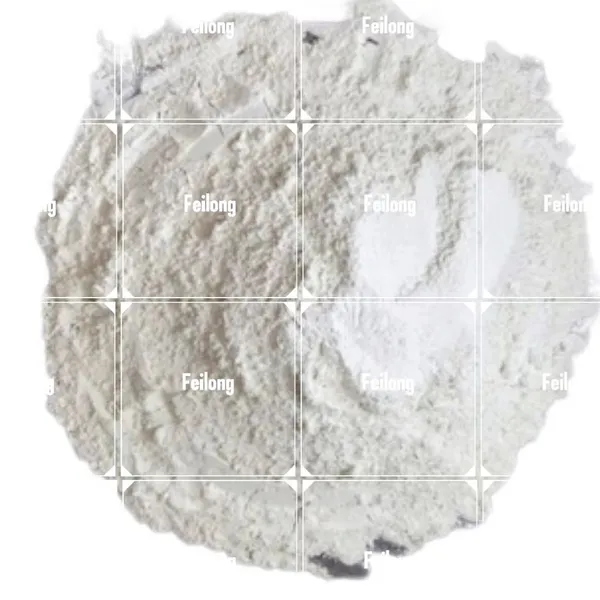
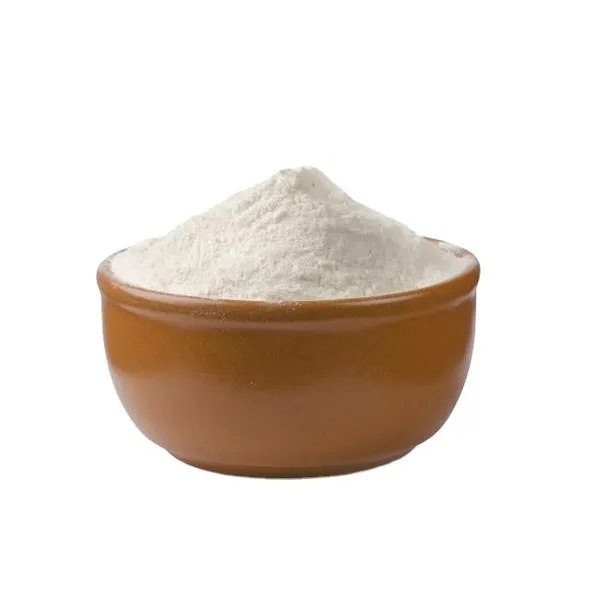
Bone charcoal in bone china is calcined animal bone, milled to a fine powder and used as the dominant non-plastic ingredient. Despite the name, the carbon has burned away; what remains is a calcium phosphate mineral structure with a small carbonate fraction.
The material enters the recipe as a white powder, typically at 325 or 400 mesh, and it behaves nothing like clay. It contributes no plasticity, no green strength and no shrinkage of its own.
What it does contribute is the chemistry that produces translucency: calcium and phosphorus that dissolve into the glass phase during firing and leave a fine crystalline network behind.
That combination, a glassy matrix holding sub-micron crystals, is why a thin bone china wall transmits light while a porcelain wall of the same thickness looks merely white.
Because the material is a mineral powder rather than a clay, it also carries no memory of the forming process. It does not shrink on drying, does not swell with water, and does not contribute to the plasticity that lets a handle be pulled from a lump.
2. What the Bone Charcoal Percentage Does to the Fired Body
The bone charcoal percentage is the single number that most changes a bone china body, and it usually sits between 40 and 50 percent by weight.
Below about 40 percent the body behaves more like a soft porcelain: less translucency, a cooler white, and a wider firing window.
Above about 50 percent the body becomes difficult to form and prone to warpage, because the non-plastic fraction overwhelms what the clay can hold together.
The number is a compromise rather than an optimum. Every point added buys translucency and costs green strength, and the right balance depends on wall thickness and on the forming route.
It also depends on the market. A body positioned as fine bone china will carry more ash and accept the yield loss, while a body competing on durability will sit lower and compete on chip resistance instead.
| Bone charcoal percentage | Translucency | Green strength | Typical use |
|---|---|---|---|
| 40-42% | Moderate | Good | Thick-walled hotelware |
| 43-45% | Good | Moderate | General tableware |
| 46-48% | High | Reduced | Thin rim, fine dining |
| 49-50% | Very high | Low | Display and artware |
Read the table as a map of trade-offs rather than a set of grades, because a body at 47 percent can behave like 44 percent if the clay is highly plastic.
3. The Other Three Ingredients in a Bone China Body Formulation
A bone china body formulation has four components, and the ash is the one that gets discussed while the other three decide whether the recipe works.
Kaolin supplies plasticity and green strength. It is usually the largest non-ash component at roughly 25 to 30 percent.
A flux, normally feldspar or a mixed alkali flux, brings the maturing temperature down to a practical range around 1,250 to 1,280 C.
A small addition of a plastic secondary clay, often a ball clay at 2 to 5 percent, is what makes high ash bodies formable at all.
| Component | Typical share | Function |
|---|---|---|
| Calcined bone ash | 40-50% | Translucency and fired whiteness |
| Kaolin | 25-30% | Plasticity and green strength |
| Feldspar or mixed flux | 20-25% | Maturing temperature control |
| Ball clay | 2-5% | Forming strength at high ash content |
Those four numbers should add to one hundred, and any reformulation that moves one of them has to move another, which is where most formulation errors begin.
The ball clay addition is the one most often forgotten. It is small enough to look optional and large enough to decide whether a 47 percent ash body can be handled at the bench.
4. Reading a Bone China Body Formulation as a Balance, Not a List
A bone china body formulation is a balance between plastic and non-plastic material, and every property follows from that ratio.
Raise the ash and the body becomes whiter and more translucent, and weaker in the green state.
Raise the clay and the body becomes easier to form and duller after firing, with a shorter firing window.
Raise the flux and the body matures earlier, which can rescue translucency at low ash content but narrows the margin against warpage.
Potters who hold that balance in mind stop treating a formulation as a list of percentages and start predicting what a change will do before firing a trial.
There is a fourth lever that is easy to forget: the firing curve. Moving the peak temperature by 15 C changes translucency as much as a two point shift in ash content, and it costs nothing in raw material.
5. How Bone Charcoal Percentage Changes Translucency and Strength
Translucency and fired strength move in different directions as the bone charcoal percentage rises, and the gap between them widens quickly above about 47 percent.
Light transmission improves steadily because the glass fraction grows and the crystalline fraction refines, scattering less light.
Fired strength, measured as modulus of rupture, typically sits between 45 and 70 MPa for tableware bodies and tends to peak before translucency does.
Green strength falls throughout, because every point of ash displaces a point of clay that was holding the piece together on the bench.
The usual trade shows up on large flatware. A body at 46 percent ash gives excellent translucency but warps on plates above 260 mm during glost firing, while dropping to 44 percent and adding 3 percent ball clay restores flatness and takes a visible slice out of measured light transmission.
6. A Bone China Body Formulation for Slip Casting and for Pressing
The same chemistry needs different rheology depending on how the piece is formed, so the formulation usually shifts between casting and pressing routes.
Casting bodies carry more water and need a deflocculant balance, and a high ash content thins the slip because ash is inert in suspension.
Pressing bodies are granulated and need enough moisture and plasticity to survive the press, which pushes the clay fraction up and the ash down.
A plant running both routes on one body usually compromises at about 44 percent ash, then adjusts the casting slip separately with deflocculant rather than with clay. Keeping two formulations costs more in silo space but removes a permanent argument between the press shop and the casting bench.
7. Controlling the Bone Charcoal in Bone China Supply
Incoming ash variation is the quiet cause of formulation drift, because a body that was balanced against one lot may not suit the next.
Three incoming checks cover most of the risk: burning loss to confirm full calcination, iron to protect fired colour, and particle size to confirm the grind.
Luo He Feilong Bone Carbon Co Ltd tests burning loss on each calcination batch and reports it against the agreed limit, which gives a potter a number to compare rather than a colour to judge by eye.
A body that suddenly shifts in translucency is more often reacting to a change in ash fineness than to a change in the percentage, and the incoming check catches that before the kiln does.
Feilong mills to 325 and 400 mesh and quotes the grind on the certificate, so a potter can see when a delivery differs from the previous one without sieving a sample in the laboratory.
8. Trials: Moving the Bone Charcoal Percentage in Three Point Steps
Formulation trials work when they move one variable at a time and fire all levels in the same cycle, so that kiln position does not masquerade as a material effect.
Three point steps are small enough to keep the firing curve unchanged for the first trial, which leaves the percentage as the sole variable.
Fire at least four test bars per level and place them across the kiln, not in one corner, because a production kiln has a temperature spread of roughly 15 to 25 C end to end.
Measure translucency, modulus of rupture, total shrinkage and flatness on every bar, and keep a fired control from the current production body for comparison.
9. Recording a Bone China Body Formulation That Repeats
A formulation record earns its keep when it captures the things that vary, and the percentages are the least variable part of it.
Record the ash source and calcination batch, the measured burning loss, the clay source and its iron content, and the peak temperature with the kiln position of each test bar.
Record the green properties too: dry strength, casting rate and rejection at thin joints. Those numbers predict whether a formulation will survive production, and they are the first thing lost when records are kept informally.
Feilong Bone Carbon keeps calcination batch records against each shipment, so a potter who finds a good result can ask for the same batch character rather than the same nominal grade.
Luo He Feilong Bone Carbon Co Ltd also holds retained samples per batch, which turns a question about last month into a comparison of two powders rather than a memory test.
10. Frequently Asked Questions
10.1 What is a normal bone charcoal percentage for tableware?
Most tableware bodies sit between 43 and 47 percent by weight, with 45 percent as a common working figure. Hotelware and thick-walled items tend toward the lower end because green strength matters more than translucency on a heavy piece. Fine dining ranges with thin rims tend toward the upper end. The figure has to be read together with the clay fraction, since a highly plastic kaolin will carry 47 percent where a lean one will struggle above 43 percent without a plasticiser, so record both numbers against the formulation rather than the ash figure on its own.
10.2 Can I raise the bone charcoal in bone china without losing strength?
You can offset part of the loss, not all of it. Adding 2 to 4 percent ball clay restores forming strength at the cost of a slightly duller fired colour and a shorter firing window. Adjusting the flux can recover some fired strength by changing the glass composition, but it narrows the margin against warpage. Above about 48 percent ash the offsets stop working, and the body becomes a display material rather than a production one that has to survive packing, shipping and a dishwasher.
10.3 Does a bone china body formulation need two firings?
Most production bone china is fired twice: a biscuit firing that matures the body, then a lower glost firing that melts the glaze. The body formulation is set by the biscuit firing, so the ash percentage and flux balance are chosen for that cycle. Once-fired routes exist and can work at lower ash content, but they demand tighter glaze fit and give less freedom in body colour. Choose the firing route before fixing the formulation, because the two decisions constrain each other.
10.4 How much does ash fineness matter compared with the percentage?
Fineness matters enough to mask a percentage change, which is why it should be held constant during a trial. A move from 325 to 400 mesh increases surface area and speeds reaction, which raises translucency at the same percentage and shortens the firing window. Potters who change grind and percentage together often conclude that the percentage does not work, when the real effect was fineness and the trial was simply read backwards. Settle the percentage first, then test the finer grind as a separate step.
Recently Posted
-
Hydroxyapatite in Calcined Bone Ash: What the Crystal Phase Does for Your Product
November 26, 2026Two bone ash powders can report the same calcium and phosphate figures and behave differently in a body, a glaze or a mould dressing. The difference often sits in the crystal phase rather than in the chemistry. Bone mineral is not a pure, well-ordered compound. It is a carbonate-substituted apatite with small crystals and a disordered surface, and calcination changes both the order and the size. This article covers what hydroRead More -
Reading a Powder Particle Size Distribution Curve
November 25, 2026A distribution report arrives as a curve and a row of numbers, and most people read the middle number and ignore the rest. That habit hides the two features that decide how a powder behaves in a plant. The curve shows where the material is concentrated and how wide that concentration is. The numbers are points on the same curve, quoted at fixed percentages. This article is about reading that document rather than producing it:Read More -
Why Molten Copper Sticks: The Case for a Bone Ash Demoulding Layer
November 24, 2026A casting that sticks to its mould rarely fails loudly. It arrives with a torn face, or with a patch of copper welded to the mould that has to be chipped off before the next pour, and the loss shows up as dressing hours rather than as a scrap line on a report. Foundries tend to answer that problem with more coating. That answer misses the mechanism, because the bond forms underneath the coating in the seconds before the filmRead More -
Bone Charcoal and Bone Ash: Two Grades Explained for Ceramic Buyers
November 23, 2026Two buyers order the same material in the same week. One asks for bone charcoal, the other for bone ash. Both receive a white powder in a lined bag, both pay a similar price per tonne, and one of them spends the next quarter chasing pinholes in a glost firing. The confusion is built into the trade vocabulary. Bone charcoal and bone ash come from the same raw material and pass through the same kind of kiln, and the differenceRead More

Contact Us
Recommended Products
-
 Manufacturer Sell Low Price Calcined Bone Ash or PowderUS$ 850MOQ: 5 Tons
-
Manufacturer Sell Low Price Calcined Bone Ash or PowderUS$ 850MOQ: 5 Tons
-
Manufacturer Sell Low Price Calcined Bone Ash or PowderUS$ 850MOQ: 5 Tons
-
Sell Well Bone Ash for Mold Releasing UseUS$ 880 - 920MOQ: 5 Tons
-
Feilong Direct Sales Die-casting Water-soluble Mold Metal Release AgentUS$ 920MOQ: 5 Tons
-
Natural Animal Bone AshUS$ 880 - 920MOQ: 5 Tons
-
China Manufacturer Supply Eco-Friendly Bone Ash PowderUS$ 890MOQ: 1 Ton
-
Calcined Bone Ash for Bone China With GoodPriceUS$ 880 - 920MOQ: 5 Tons
-
Synthetic Bone Ash for Ceramic With Good PriceUS$ 850MOQ: 5 Tons
-
Calcium and Phosphorus Powder - 325 MeshPowderUS$ 920MOQ: 5 Tons
-
Calcium and Phosphorus Powder - 325 MeshPowderUS$ 850MOQ: 5 Tons
-
Calcium Stearate PVC PE Lubricant Mould-releasing Powder ManufacturerUS$ 850MOQ: 5 Tons
-
Reputed Supplier Selling Bone Ash Powder Which Meet With Environmental Standard As Animal FeedstuffUS$ 850MOQ: 5 Tons
-
Industrial Grade Bone Ash for Bone Ceramics and MetallurgyUS$ 900MOQ: 10 Tons
-
Animal Ashes Used for Bone ChinaUS$ 900MOQ: 5 Tons
-
Calcium and Phosphorus Powder - 325 MeshPowderUS$ 850MOQ: 5 Tons
-
High Quality Bone Ash for Mold Releasing Use/bone Ash PowderUS$ 850 - 880MOQ: 5 Tons
-
Manufacturer Sell Low Price Calcined Bone Ash or PowderUS$ 850MOQ: 5 Tons
-
Calcined Bone Ash for Bone China With GoodPriceUS$ 880MOQ: 5 Tons
-
High Quality Bone Ash for Mold Releasing Use/bone Ash PowderUS$ 880 - 920MOQ: 5 Tons