
 Business License

From Sintered Bone to Milled Powder: How Bone Ash Powder Is Made
A bag of bone ash powder behaves in a way that was decided months before it was opened. Two plants can buy sintered bone from the same source, mill it to the same nominal mesh, and end up with powders that pack differently, wet out differently and release differently on a mould face.
The variable is not the chemistry. Calcium and phosphorus stay roughly where the kiln put them, at or above 35 percent and 16 percent respectively. What changes downstream is size distribution, particle shape and the amount of iron the powder picks up on its way through the mill.
This article follows the route from sintered bone to packed bag. It explains what the bone ash powder milling process controls at each stage, how sieved bone ash powder grades are set at 325 and 400 mesh, and why bone ash powder particle shape deserves as much attention as the number printed on the bag.
1. Why the Bone Ash Powder Milling Process Starts at the Kiln
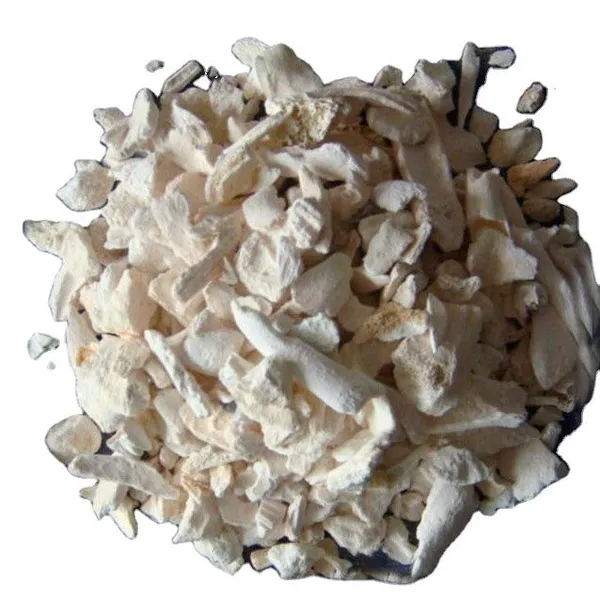
Milling can break what the kiln made, and it cannot make anything else. A bone charge sintered at roughly 900 to 1000 C develops a fine crystalline structure that grinds into angular, slightly porous grains with a high surface area for their size.
Push the sintering temperature higher and the crystals coarsen. The same mill then needs more energy and more passes to reach 45 microns, and the grains that come out are rounder and denser, which changes how the powder behaves in a slurry even at an identical sieve residue.
This is why a mill certificate and a customer complaint about behaviour can both be true at the same time. Feilong Bone Carbon tests burning loss on incoming sintered bone for that reason, because a charge that did not fully convert will not grind into a stable powder however long the mill runs.
A burning loss at or below 1.0 percent is the usual sign that the organic fraction has gone. Above that figure, the powder still contains material that will burn in the kiln of the plant that buys it, and no amount of grinding redistributes it into harmlessness.
2. From Sintered Bone to Bone Ash Powder
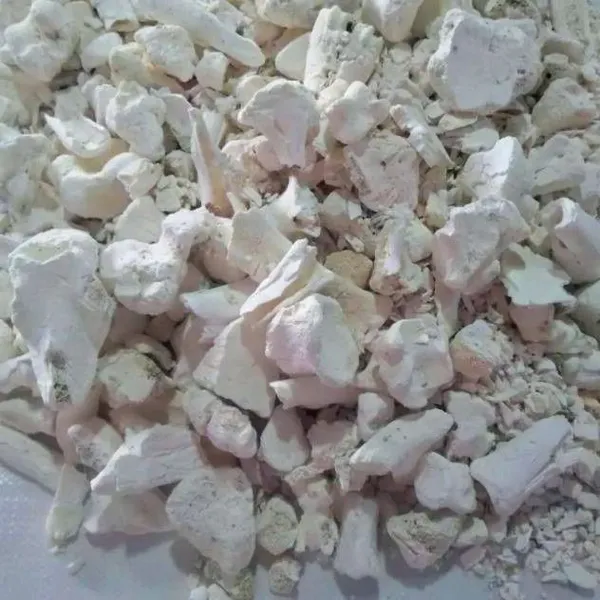
Sintered bone leaves the kiln in lumps that no fine mill will accept, so the first operation is size reduction rather than grinding.
A jaw crusher takes the lumps down to roughly 20 to 30 mm, and a hammer mill follows to bring the material under about one millimetre. Dust extraction runs throughout, because bone ash is fine enough to stay airborne and abrasive enough to wear mild steel.
Iron control begins here rather than at the packing line. Crusher jaws, hammer tips and liners all wear, and every millimetre of wear that enters the powder has to be found later by a magnet or by analysis.
Because Luo He Feilong Bone Carbon Co Ltd calcines and mills inside one plant, the charge that leaves the kiln can be followed into the mill without a handover between two companies. That continuity is what makes a batch number on a bag mean something six months later.
3. The Bone Ash Powder Milling Process, Stage by Stage
The bone ash powder milling process runs through six operations between the kiln and the pallet, and each one controls a different property. Reading them in order makes it easier to work out where a powder problem was introduced.
| Stage | Equipment | What it controls | Typical target |
|---|---|---|---|
| Receiving and crushing | Jaw crusher | Top size into the mill | Under 25 mm |
| Primary grinding | Hammer mill | Throughput balance | Under 1 mm |
| Fine grinding | Ball mill or roller mill | Surface area and shape | 45 or 38 micron top cut |
| Classification | Air classifier | Fines fraction | Cut point near the mesh |
| Sieving | 325 or 400 mesh screen | Oversize removal | Low residue on screen |
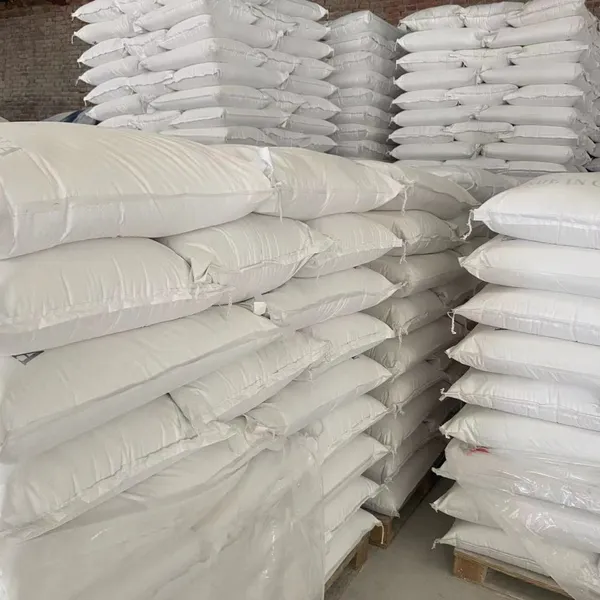
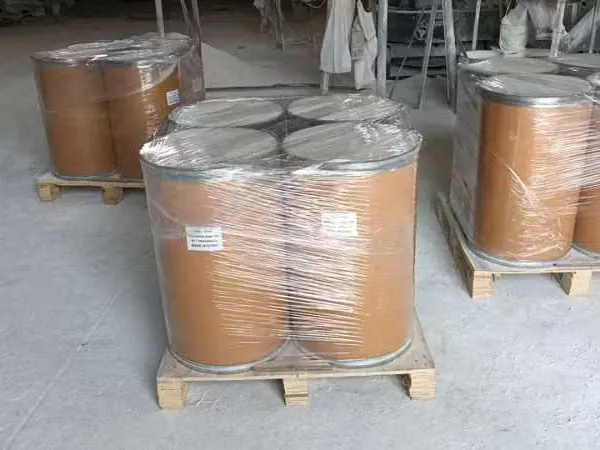
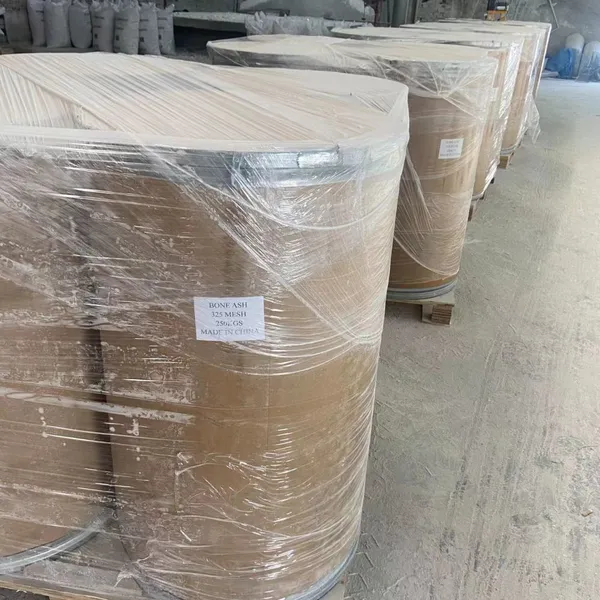
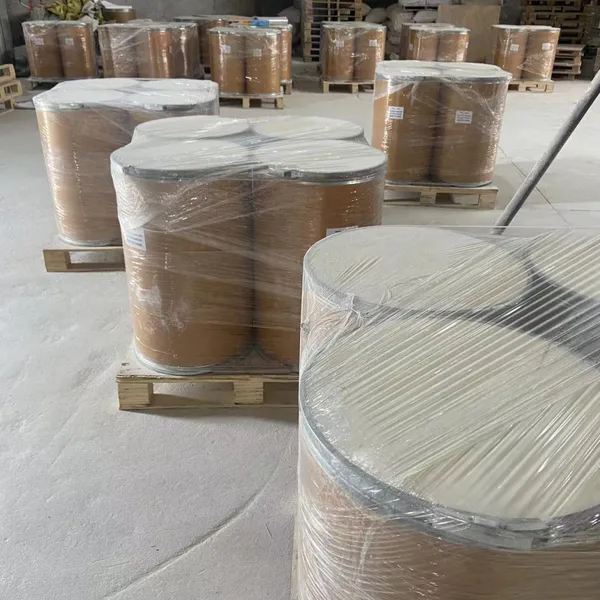
| Packing | Lined 25 kg bag | Moisture pick-up | Dry and sealed |
Classification is the stage most often missing from a supplier description, and it is the stage that decides how much fine material the powder carries. A mill without classification produces a wide band, and a wide band is what makes a casting slip thicken unpredictably from one delivery to the next.
Sieving comes after classification because a screen removes oversize and nothing else. It does not narrow the band below the aperture, which is why two powders can both pass 325 mesh and still behave differently on the bench.
Each transition between stages is also a sampling point. Material that has just passed a mill is homogeneous; material that has travelled down a chute and sat in a silo for a week is not, and the difference is enough to make a spot check at packing unrepresentative.
4. Sieved Bone Ash Powder Grades: 325 and 400 Mesh
Sieved bone ash powder grades are defined by the screen, so it is worth being precise about what the number means. A 325 mesh screen has apertures of roughly 45 microns, and a 400 mesh screen roughly 38 microns.
Passing a screen says little about the particles that went through it. A powder can pass 400 mesh with most of its mass between 10 and 30 microns, or with most of its mass sitting just below the aperture, and the two will behave differently in a body, a glaze or a release layer. For sieved bone ash powder grades the certificate therefore states a residue rather than a distribution.
A residue figure on a certificate is therefore a starting point rather than a description of behaviour. It tells a buyer that the oversize has been taken out. It does not tell them the shape of the distribution underneath the cut.
Buyers comparing sieved bone ash powder grades across suppliers should ask for the residue figure, the loss on drying and, where it is available, a surface area measurement. Those three together describe a powder far better than the mesh number on its own.
Feilong Bone Carbon supplies both grades from the same calcination stream, which allows a plant to compare 325 and 400 mesh without also comparing two different raw bone sources at the same time.
5. Bone Ash Powder Particle Shape and What It Changes
Bone ash particles are not spheres. Milling bone produces irregular, angular grains with internal porosity, and that shape does more to determine behaviour than the mesh number does.
Angular grains interlock, so a compacted layer of them holds together and resists being washed away by a metal stream. Rounded grains slide past each other instead, which lowers viscosity in a slurry but produces a less continuous film once the carrier has burned off.
Porosity matters for reactivity. A porous grain exposes more surface to the glass phase in a bone china body, so it dissolves earlier in the firing than a dense grain of the same size would, and translucency develops at a lower peak temperature.
Bone ash powder particle shape also changes packing. A wide mix of angular sizes packs to a higher fraction than a narrow band of rounded ones, which is why a 400 mesh powder of one morphology can coat a mould face with less material than a 325 mesh powder of another.
None of this appears on a data sheet. A specification listing calcium, phosphorus, iron, burning loss and mesh can be identical for two powders that behave as different materials, because bone ash powder particle shape is a process outcome rather than a chemical property.
A buyer who needs to compare two candidates on shape has few direct options. Microscopy will show it, a tapped density test will hint at it, and a simple slurry viscosity trial at fixed solids will reveal it in a way that matters to the plant rather than to the laboratory.
6. Particle Shape Control on the Mill Circuit
Shape is set by mill type, media and residence time, which means bone ash powder particle shape can be steered but not set to any value a buyer might want.
A ball mill rounds edges over time, so a long residence produces smoother grains while a short one preserves angularity. A hammer mill generates more fines and more sharp edges. An air-classified roller mill holds a narrower band but changes shape very little.
In a representative trial, two powders were milled to the same 400 mesh residue from the same sintered charge, one on a ball mill and one on a hammer mill circuit. The ball-milled powder ran about 10 percent lower in slurry viscosity at equal solids, while the hammer-milled powder gave a more continuous film and fewer sticking events in a deep pocket.
Neither result was a defect. The two powders suited different jobs, and the mesh number printed on both bags was the same. What separated them was bone ash powder particle shape, which no sieve certificate records.
7. Iron Pickup in the Bone Ash Powder Milling Process
Every steel surface the powder touches is a source of contamination, and iron is the element buyers watch because a typical specification holds it at or below 0.05 percent.
Wear scales with hardness, speed and tonnage, so a mill that has run for years without a liner change will show more iron than a new one on the same feed. Magnet traps catch coarse fragments but not the fine abraded material that has already blended into the batch.
The practical controls are a lined or ceramic-faced fine circuit, a short residence in the last grinding stage, and an iron check on the finished powder rather than on the feed alone. Checking the feed confirms what went in, and the figure a customer cares about is what comes out at the bag.
In one representative case, a mill running a manganese steel classifier wheel moved from roughly 0.07 to 0.04 percent iron after the wheel was replaced with a lined version, with no other change to the circuit.
8. Sampling Sieved Grades Before Packing
A sample taken from the top of a bag is not a sample of the batch. Material settles during filling and separates by size, so fines concentrate in one part of the bag and coarse grains in another.
The usual practice is a thief sample taken across the depth of the batch silo after sieving and before packing, then split into a test portion and a retained portion. The same routine applies to all sieved bone ash powder grades, whether the screen is 325 or 400 mesh.
Burning loss, iron, moisture and sieve residue are the four figures that catch most problems, and each is quick enough to run per batch rather than per shipment. The retained portion is what makes a complaint answerable months later, when the powder in question has long since been fired. Feilong keeps that retained portion for every batch it sieves, which is the reason a question about a delivery from last season can be answered with a measurement rather than an opinion.
9. Limits of the Milling Process
The bone ash powder milling process cannot repair an under-calcined charge. If burning loss is above the limit, the powder carries organic residue that shows up as pinholes or as an unstable pH in slurry, and grinding it finer distributes the problem more evenly without removing it.
It cannot change the calcium to phosphorus ratio, take iron out chemically, or set fired colour. Those belong to the bone source and to the kiln, and a supplier who offers to adjust them by grinding is describing something the process does not do.
What milling does control is size, distribution width, particle shape and contamination. Those four are enough to explain most differences in behaviour between two suppliers running what looks like the same grade.
10. Frequently Asked Questions
10.1 Does a finer mesh always give a better powder?
Not necessarily. A finer cut raises surface area, which speeds reaction in a body and shortens the firing window. In a release layer, a finer powder can produce a thinner film that breaks down before the casting is complete. The right grade depends on the job, since a deep pocket on a large casting usually wants a powder that builds a continuous layer rather than the finest one on offer, while a bone china body usually wants the finer grind for translucency.
10.2 What does 325 mesh mean in microns?
A 325 mesh screen has apertures of roughly 45 microns, and a 400 mesh screen roughly 38 microns, following the usual sieve series. Passing the screen means the particles are smaller than the aperture, not that they are all close to it. A 325 mesh powder may hold a large fraction well below 20 microns. When comparing suppliers, ask for the residue on the screen and, where possible, a size distribution, because the mesh number by itself leaves the band beneath the cut undefined and hides differences that show up on the bench.
10.3 Why does my slurry behave differently with the same mesh?
Because mesh describes an upper limit while a slurry responds to the whole distribution and to particle shape. Two 400 mesh powders can differ in fines content, surface area and grain roundness, and each of those changes water demand and viscosity at equal solids. pH matters too, since calcined bone ash typically sits between 9 and 11.5 and a powder stored damp will drift downward. Ask for surface area and loss on drying alongside the sieve figure before assuming the supplier changed something.
10.4 Can milling change the calcium and phosphorus content?
No. Calcium typically stays at or above 35 percent and phosphorus at or above 16 percent, because both figures are set by the bone and the calcination rather than by grinding. What milling does change is the iron figure, through wear, and the moisture figure, through exposure to air. A certificate showing calcium outside the expected range points to a different raw material or to dilution, so treat that as a sourcing question rather than a processing one and ask what changed upstream.
Recently Posted
-
Why Molten Copper Sticks: The Case for a Bone Ash Demoulding Layer
November 24, 2026A casting that sticks to its mould rarely fails loudly. It arrives with a torn face, or with a patch of copper welded to the mould that has to be chipped off before the next pour, and the loss shows up as dressing hours rather than as a scrap line on a report. Foundries tend to answer that problem with more coating. That answer misses the mechanism, because the bond forms underneath the coating in the seconds before the filmRead More -
Bone Charcoal and Bone Ash: Two Grades Explained for Ceramic Buyers
November 23, 2026Two buyers order the same material in the same week. One asks for bone charcoal, the other for bone ash. Both receive a white powder in a lined bag, both pay a similar price per tonne, and one of them spends the next quarter chasing pinholes in a glost firing. The confusion is built into the trade vocabulary. Bone charcoal and bone ash come from the same raw material and pass through the same kind of kiln, and the differenceRead More -
Inside the Calcination Kiln: How Temperature Shapes Calcined Bone Ash Quality
November 21, 2026Two bags of bone ash can carry the same certificate and behave as different materials, and the difference frequently comes from a kiln curve rather than from chemistry. Calcination is a thermal process with three knobs: how hot, how long, and how evenly. Get all three right and the product is a white powder with a burning loss under 1.0 percent and a crystal structure that grinds into predictable particles. Get one wrong andRead More -
Quality Systems at Feilong: ISO-Certified Bone Ash Production from Raw Bone to Finished Powder
September 4, 2026A foundry buyer in Eastern Europe once told a Feilong sales engineer that he had received bone ash from three different Chinese su Read More

Contact Us
Recommended Products
-
 Manufacturer Sell Low Price Calcined Bone Ash or PowderUS$ 850MOQ: 5 Tons
-
Manufacturer Sell Low Price Calcined Bone Ash or PowderUS$ 850MOQ: 5 Tons
-
Manufacturer Sell Low Price Calcined Bone Ash or PowderUS$ 850MOQ: 5 Tons
-
Sell Well Bone Ash for Mold Releasing UseUS$ 880 - 920MOQ: 5 Tons
-
Feilong Direct Sales Die-casting Water-soluble Mold Metal Release AgentUS$ 920MOQ: 5 Tons
-
Natural Animal Bone AshUS$ 880 - 920MOQ: 5 Tons
-
China Manufacturer Supply Eco-Friendly Bone Ash PowderUS$ 890MOQ: 1 Ton
-
Calcined Bone Ash for Bone China With GoodPriceUS$ 880 - 920MOQ: 5 Tons
-
Synthetic Bone Ash for Ceramic With Good PriceUS$ 850MOQ: 5 Tons
-
Calcium and Phosphorus Powder - 325 MeshPowderUS$ 920MOQ: 5 Tons
-
Calcium and Phosphorus Powder - 325 MeshPowderUS$ 850MOQ: 5 Tons
-
Calcium Stearate PVC PE Lubricant Mould-releasing Powder ManufacturerUS$ 850MOQ: 5 Tons
-
Reputed Supplier Selling Bone Ash Powder Which Meet With Environmental Standard As Animal FeedstuffUS$ 850MOQ: 5 Tons
-
Industrial Grade Bone Ash for Bone Ceramics and MetallurgyUS$ 900MOQ: 10 Tons
-
Animal Ashes Used for Bone ChinaUS$ 900MOQ: 5 Tons
-
Calcium and Phosphorus Powder - 325 MeshPowderUS$ 850MOQ: 5 Tons
-
High Quality Bone Ash for Mold Releasing Use/bone Ash PowderUS$ 850 - 880MOQ: 5 Tons
-
Manufacturer Sell Low Price Calcined Bone Ash or PowderUS$ 850MOQ: 5 Tons
-
Calcined Bone Ash for Bone China With GoodPriceUS$ 880MOQ: 5 Tons
-
High Quality Bone Ash for Mold Releasing Use/bone Ash PowderUS$ 880 - 920MOQ: 5 Tons